
The draft regulations in this regard are expected to be approved by the board during the meeting.

Most brokerages have maintained their Sensex and Nifty targets as they believe there is little room for further re-rating in the backdrop of weak earnings.
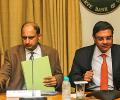
'Those who come from outside are surprised at the relatively small strength of the RBI supervisory cadre, relative to the needs of the country and the needs of the financial sector.'

Risk sentiment is likely to be favourable if oil prices stay benign, global growth sentiment remains robust and the dollar index does not break out, says B Prasanna.
Historically, the RBI has tried to keep the crooks at bay by issuing a circular a day. What it needs is more onsite supervision. Merely checking high-frequency data with the help of technology is insufficient, notes Tamal Bandyopadhyay.

Over 15 years, with seven per cent growth, the Indian economy will be three times bigger.

One incident should not be used to generalise the health of all cooperative banks, says RBI governor Shaktikanta Das.
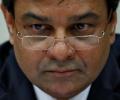
In his first comments after resigning as RBI governor on December 10 last year amid sharp differences with the government, Patel said banks indulged in over-lending, while the government did not "fully play" its role, and also conceded that the regulator should have acted earlier.

RBI has brought down forecasts of both year-end inflation and growth.

Large urban co-operative banks may come to be solely under the provisions of the Banking Regulation Act, even as the smaller among them are to remain within the exclusive fold of the Registrar of Co-operative Societies. The upcoming changes will bring the curtains down on the vexed issue of dual control of UCBs, which has been in vogue for 54 years. The new framework will affect 1,551 UCBs in the country, which had a total business of Rs 7.36 trillion.

The Indian government and RBI must keep foreign equity investors happy and avoid crushing growth expectations, notes Akash Prakash.

Facing the twin task of fighting the coronavirus pandemic today and building a better tomorrow, the world is experiencing a new Bretton Woods moment, IMF managing director Kristalina Georgieva said
The RBI's projections for consumer inflation over the rest of the year indicate some acceleration, with the rate reaching eight per cent in its baseline scenario.

The Financial Stability and Development Council meeting on Tuesday started with an air of tension in the room. An official present described the participants' body language as "tetchy". However, once presentations and discussions begun, the mood considerably eased.

"I am an academic and I have always made it clear that my ultimate home is in the realm of ideas," Rajan said in a letter to staff.

Should we not stop uncritically celebrating NRIs' elevation without regard to what kind of companies they are getting to run, and the nature of their products or business practices, asks T N Ninan.
'We don't know how much the Pay Commission outflow will be.'

'In a serious fiscal situation like this, an ostrich-like focus on annual budgeting, event management and defensive rhetoric will only make matters worse,' warns Rathin Roy.

'The temptation of governments, to have a finger in the RBI pie will be just too great to resist, unless extensive amendments are carried out in the RBI Act treating it almost as the fourth branch of the government.'

Curbing the federal deficit is the government's absolute priority on February 28.

We should not see a strong rupee as strength but target a fairly priced rupee for restoring our competitiveness, says Rashesh Shah.
Jaitley also hinted that these very economic realities could decide whether the government sticks to a fiscal consolidation roadmap or not.

He added that the risks can increase if the Chinese slowdown gathers more speed.

Watal panel had suggested an independent payments regulator be set up.

Pegging the cost of the covid-19 lockdown at USD 120 billion (approximately Rs 9 lakh crores) or 4 per cent of the GDP, analysts on Wednesday sharply cut their growth estimates and stressed on the need to announce an economic package. The Reserve Bank of India (RBI), which is scheduled to announce its first bi-monthly policy review on April 3, is set to deliver a deep rate cuts and it should also be assumed that the fiscal deficit targets will be breached, analysts said.

Most forecasts do not have a track record of transparency and accuracy

On India achieving higher growth, Rajan said 9 per cent, which is the widely believed potential growth rate of the economy, is still some time away.

"The emphasis is on making every rule, law, policy people-centric, and public-friendly. This is the use of the new governance model and the country is getting its results," Prime Minister Modi said while speaking at the launch of a platform for 'Transparent Taxation -- Honoring the Honest'.
If the new governor can think out of the box even as he signals that he can bat for the RBI cadre and respect its institutional memory, that will go a long way in getting out of the current impasse.

India's public debt ratio, which remarkably remained stable at around 70 per cent of the GDP since 1991, is projected to jump by 17 percentage points to nearly 90 per cent because of increase in public spending due to COVID-19, the IMF said.

'Probability has increased for India to have improved fundamentals'.

Of the seven surveys presented under Modi govt, predictions of three were quite close to the actual GDP growth rate, one saw the base year change in between, but the last three were way off the mark.

Rajan said RBI is in the process of creating a framework which will make the sustainable growth possible.

Every political party loves to use the bait of loan waiver to woo the electorate. If their hearts bleed for the poor, they can always use the party funds to pay off the lenders, suggests Tamal Bandyopadhyay.

Flexibly targeting inflation is consistent with a demand stimulus, says Ashima Goyal.

'With over 50 per cent of medical seats reserved for those who have the ability to pay a fee ranging from Rs 50 lakh to Rs 1.5 crore for a five-year MBBS course and quotas in accordance with affirmative policies in government colleges, the band of seats available for the not-so-rich and non-OBCs is very narrow.'

'Dr Rajan is often preachy with commandments aimed at nobody in particular,' complains M S Sriram.

'Mostly, the relief, if needed, would be for housing loans where a person has lost a job and is unable to pay his EMI or there has been a temporary salary cut.'

Traditionally, financial institutions have operated risk functions in silos. However, the nature of unknown threats today requires industry participants to work together, says Vikram Limaye.
The economists, who were surveyed, also felt it will take time for banks to make any further reduction in deposit rates
